In the beginning there are no rules. Chant Hare Krishna and your life will be Sublime. Then one day a notice is posted in the temple.
“All initiated devotees must attend morning and evening classes. Must not be addicted to any kind of intoxicants, including coffee, tea and cigarettes. They are forbidden to have illicit sex-connections. Must be strictly vegetarian. Should not extensively mix with non- devotees. Should not eat foodstuffs cooked by non-devotees. Should not waste time in idle talks nor engage in frivolous sports. Should always chant and sing the Lord’s holy names, Hare Krishna, Hare Krishna. Krishna Krishna, Hare Hare, Hare Rama, Hare Rama, Rama Rama, Hare Hare.”
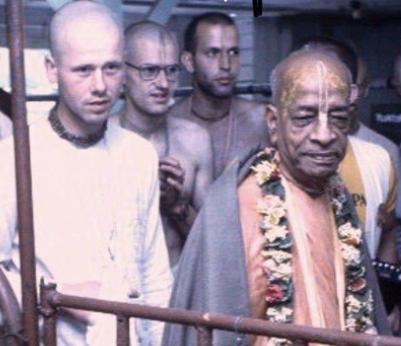
My father Syamakunda Das, His Divine Grace Bhaktivedanta Swami. New Vrindavan,1976
When my parents got to New Vrindavan, West Virginia in 1975 it was little more than a few devotees and old farmhouses and a barn. Kirtanananda Swami put my father to work immediately converting the old farmhouse into the temple of Radha Vrindavan Chandra. My father built Kirtananda’s first ashram with only a rigging axe from the giant oaks that the devotees had timbered behind Govardhan Hill. Then came the Brahmachari (celibate monks) ashram, the barn and the utility building where the woodshop, marble shop and the molds for Palace were manufactured.
New Vrindavan, named after Lord Krishna’s birthplace in India, was founded when Kirtananada Swami (Keith Ham) and Hayagriva Das (Howard Wheeler) found the land in an advertisement in the San Francisco Oracle. The owner thought these two fairies from New York City would not last the winter and leased the property to them for 99 years for the sum of $4000, thinking they would move out, but he was wrong. Over the next 10 years they would buy most of the land surrounding the farm accumulating over 3,000 acres.
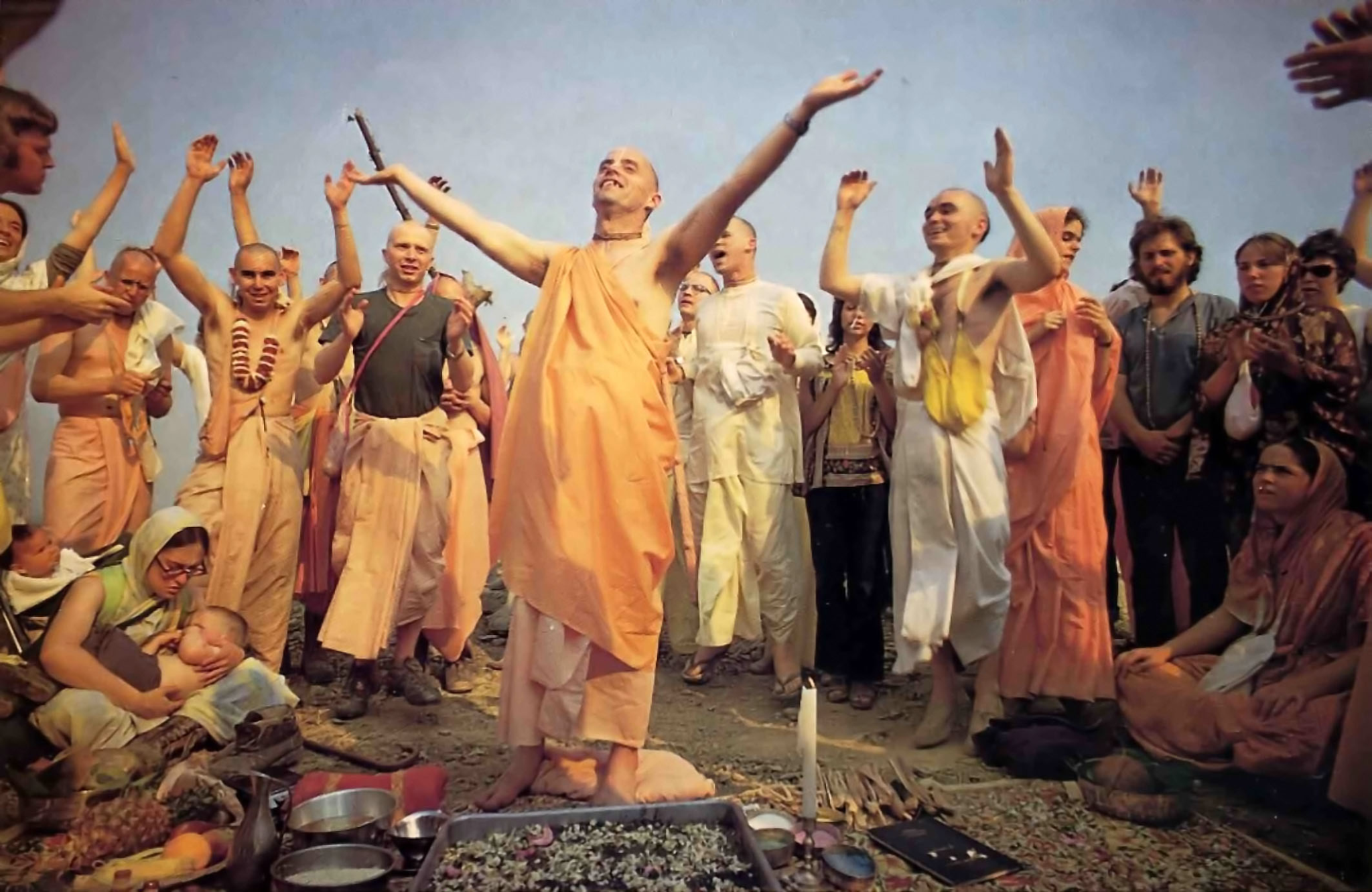
(left) Author in my mothers lap as a baby, (center) Kirtannanda Swami and his early followers.
Kirtananda Swami’s followers served with fanatical devotion living under the most austere conditions through hot summers and freezing cold winters surviving on rice and pinto beans. In less than 10 years they built New Vrindavan from a community with a few hippies in ramshackle farmhouses and barns to a 3000-acre Hare Krishna community with almost 700 members. In 1974 they began construction on a magnificent palace for their guru Bhaktivedanta Swami.
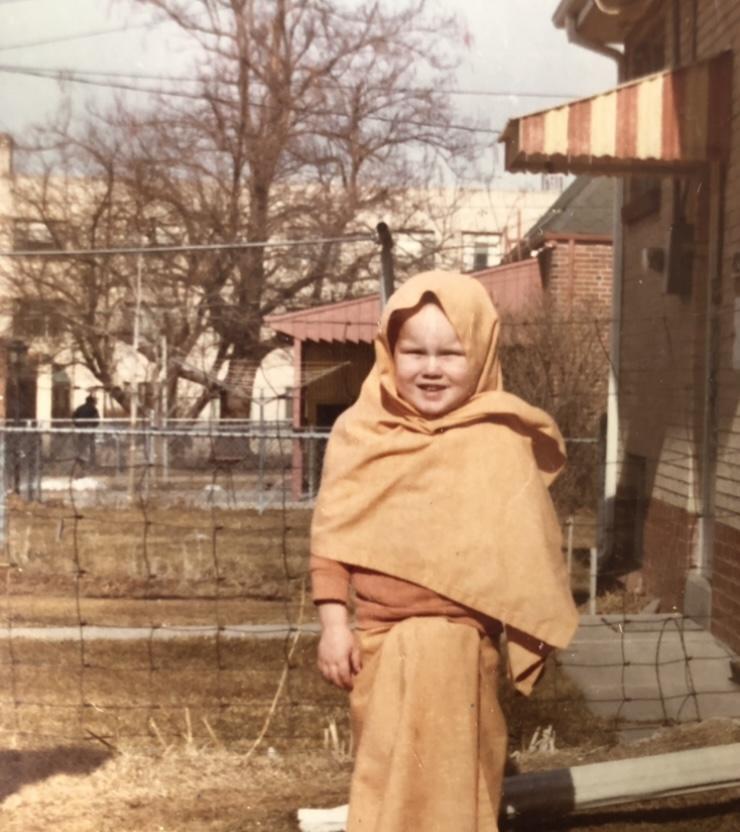
Author Denver, Colorado 1973
At the age of 5, I was sent to live at Nandagram Gurukula, the ashram at New Vrindavan where I would spend the next 3 years. Nandagram was white two-story farmhouse at the end of a long gravel road. It sat behind a row of 50-year-old pine trees and in the shadow of two rolling hills that protected it from the cold north winds. Cows grazed on the hillsides and in the green valley that the house overlooked. The sound of water splashing over the rocks in the creek could be heard in the quiet of the night.
There were about 20 of us between the ages of 5 and 7. Our heads were shaved and we wore the wooden tulasi beads and the saffron robes of Vaishnava monks. We slept on the hardwood floors in our sleeping bags. At 2:30 am our teachers would wake us, dumping us out of our sleeping bags if we were not standing at attention bright eyed and bushy tailed.
“JivJago! Jiv Jago! Wake up sleeping souls.!” they shouted.
Half asleep we would rush for the shower. If you got there early there was warm water in the faucet but warm water ran out quickly. If you got there late chances were you were taking a cold shower. We dressed in our saffron dhotis (robes) and made our way to the temple room for the morning kirtan for the purification of our spirit. We were expected to chant enthusiastically, or face being punished with a quick slap across the back of the head. Then followed a lecture on the Bhagavad Gita, which we were expected to stay awake for, also under penalty and under constant jeopardy of the slap on the ear. Then we sat down for breakfast, which consisted of rice and oat water, a mixture of oats, salt, ginger and water. We spend the mornings in class learning English, Sanskrit, Math and Geography and studying the Bhagavad Gita.
From there we would head out to the barn to call the cows in for milking. The cows hearing the sound of our voices and knowing that food was being served would jog down the hill or hike up from the creek pushing their way into the barn, their milk bags overflowing with milk. Herding the cows into their stalls we milked them by hand into 5 gallon buckets. The work was back breaking for a grown man. For 5 and 6 year olds it was overwhelming but it was still better than being in school.
In the afternoons we were allowed to play. We wandered over the hills and through the valleys playing hide and seek and collecting sticks and rocks for war games. We built elaborate forts out of hay bales in the barn, had corncob wars and fought each other with sticks and stone. In the evenings we read stories of Lord Krishna pastimes before falling asleep. Putana the assassin who murdered children by poisoning them with her breast milk, Aristasura who disguised himself as a bull, Agasura the great snake, Dhenukasura the donkey demon and the serpent Kaliya all were defeated by Krishna before the age of 16. Rukmini, Draupadi and the Pandavas were all saved by Krishna’s mercy. In all these stories the message was the same. “If Krishna wants to kill you, no one can save you. If Krishna wants to save you, no one can kill you.”
The standards at Nandagram Gurukula were very high and discipline was harsh. We missed our parents who were busy selling books, collecting money and building temples for their guru. Serving guru and Krishna was the most important thing in life. Everything else was Maya’ illusion. Though we hated the ashram most of the time, I think we were all true believers then and hoped to one day be initiated as full-time devotees. We wanted to help spread Krishna Consciousness around the world. We were told that all we needed were 18 perfect yogis to conquer the world. I aspired to be the chosen few. I was 8 years old when my teachers decided that I had outgrown the small Nandagram School at New Vrindavan. When they told me I was going to study at Bhaktivedanta Institute in Vrindavan, India, the birthplace of Lord Krishna, I was ecstatic.